How an AC produces water
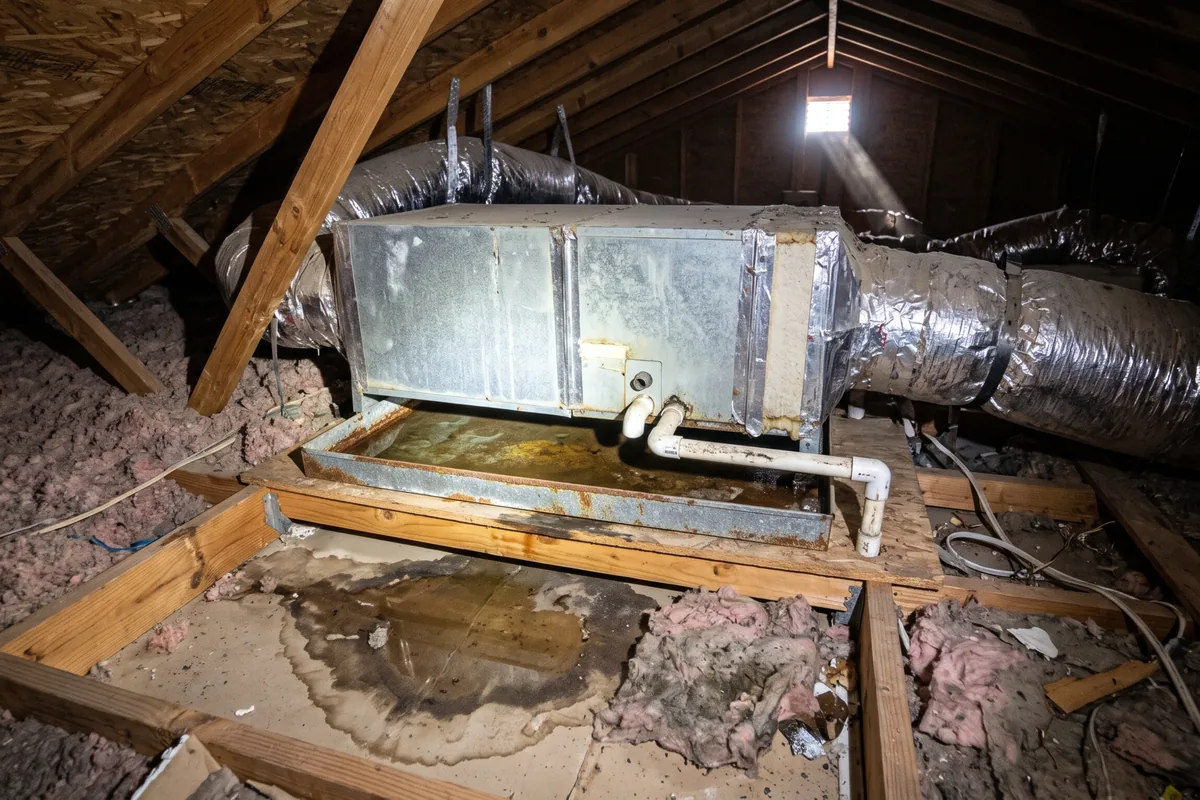
As warm air passes over the cold evaporator coil, moisture condenses and drips into a pan, then flows through a drain line outside or to a drain. In Arizona, units can run almost continuously for months, so even a small blockage can cause major damage.
What goes wrong
- Algae and sludge clog the condensate line
- The primary drain pan rusts through or cracks
- Air filters are neglected and the coil freezes, then melts and overflows
- A float switch is missing or fails
- Poor installation leaves the line improperly sloped
Signs of a leaking AC
- Stains or dripping from the ceiling near the air handler or vents
- Water in the secondary drain pan
- Musty smell near the unit
- The AC shuts off unexpectedly (a float switch may have tripped)
What to do right away
Turn the AC off at the thermostat to stop making more water, and place a bucket under drips. Do not stand beneath a bulging ceiling. Call an HVAC technician to clear the line, and a restoration provider if drywall or insulation is wet. See water leak damage restoration.
Prevention
- Have your system serviced every spring
- Change filters on schedule
- Flush the condensate line with a recommended solution, if your technician approves
- Install a float switch or a water sensor in the pan
Quick answers
Can an AC leak cause mold?
Yes. Wet insulation and drywall around an air handler can grow mold if not dried quickly.
Is AC water damage covered?
Sometimes, if sudden and accidental, but gradual leaks are often excluded. Check your policy.
Need help now?
If water is already in your home, call (786) 928-1890 for 24/7 help in the West Valley. See our emergency water damage restoration service.
West Valley Water Damage is a referral service. Information here is general and not legal, insurance or engineering advice.