Water Damage Insurance Claims Help for Arizona Homeowners
What is usually covered, what to document and how to avoid mistakes after a water loss. General guidance, not legal or insurance advice.
What homeowners insurance usually covers
Always check your own policy. These are general patterns, not guarantees.
| Type of water loss | Often covered? | Notes |
|---|---|---|
| Sudden pipe burst or supply line failure | Often | Resulting damage usually covered; the pipe repair may not be. |
| Appliance failure (washer, dishwasher, water heater) | Often | Sudden and accidental discharge is commonly covered. |
| Roof leak from storm damage | Varies | Depends on cause and policy wording; worn roofs may be excluded. |
| AC condensate overflow | Varies | Sudden overflow may be covered; gradual leaks often excluded. |
| Flood and surface water | Usually not | Needs separate flood insurance, such as NFIP or a private policy. |
| Sewer or drain backup | Usually not | Often requires a water backup endorsement. |
| Long-term seepage or neglected maintenance | Usually not | Commonly excluded; report problems early. |
Claim checklist: what to gather
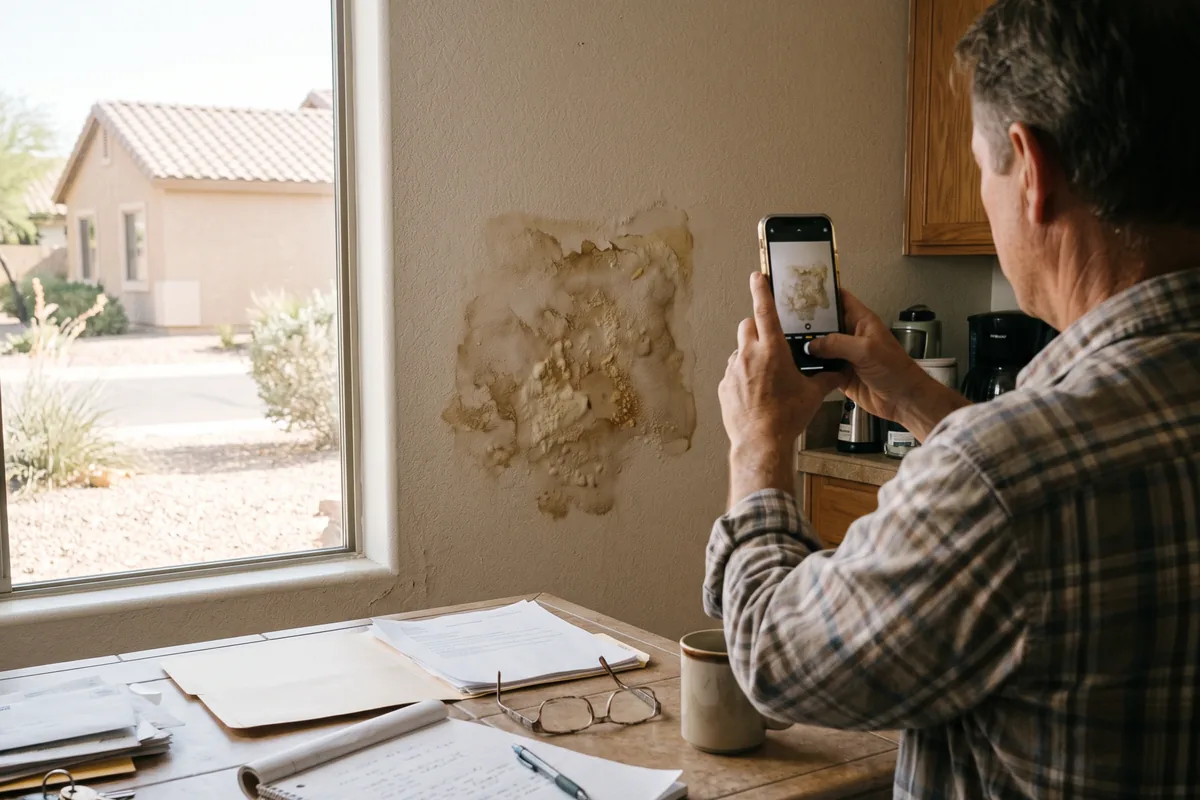
- Photos and video of damage before cleanup
- The date and time you discovered the loss and what you did next
- A room-by-room list of damaged contents with age and estimated value
- The restoration provider’s scope of work, moisture logs and invoice
- Plumber, HVAC or roofer invoices showing the cause
- Receipts for emergency purchases and hotel stays
- Your claim number and notes from every call

Six steps after a water loss
Make it safe and stop the source
Shut off water, avoid electrical hazards and protect people and pets.
Document before you move things
Photograph damage, then move contents to safe areas.
Start mitigation
Call a restoration provider to extract water and dry the structure. Most policies expect you to prevent further damage.
Report the claim
Call your insurer or agent and open a claim. Ask about deadlines and required forms.
Meet the adjuster
Share your documentation and provider’s scope. Ask for explanations in writing.
Repair and keep records
Hire licensed contractors for reconstruction and keep invoices.
Helpful resources and cautions
- The Arizona Department of Insurance and Financial Institutions (DIFI) offers consumer assistance and information on insurance complaints.
- Verify any contractor’s license through the Arizona Registrar of Contractors at roc.az.gov.
- Be careful signing any “assignment of benefits” or work authorization without reading it. Ask questions first.
- For denied or disputed claims, consider consulting a licensed attorney or public adjuster.
How it works: West Valley Water Damage is a referral service. When you call (786) 928-1890, we try to connect you with an independent local restoration provider who performs and prices the work. Contact the service provider to discuss the work, pricing and terms.
Read our guide: Water damage insurance claims in Arizona.
Water damage insurance FAQs
Does homeowners insurance cover water damage in Arizona?
Standard Arizona homeowners policies often cover sudden and accidental water damage, such as a burst pipe or appliance failure, but commonly exclude flood, sewer backup without an endorsement and long-term leaks. Policies vary, so check yours or ask your agent.
Does insurance cover a slab leak?
It varies. Some policies cover resulting water damage and the cost of accessing the pipe, while the pipe repair itself may not be covered. Ask your insurer how your policy treats slab leaks.
Is flood damage covered by homeowners insurance?
Usually not. Flood coverage typically comes from a separate National Flood Insurance Program or private policy.
Need to start mitigation before you file?
Call now. Providers can begin water removal while you contact your insurer.